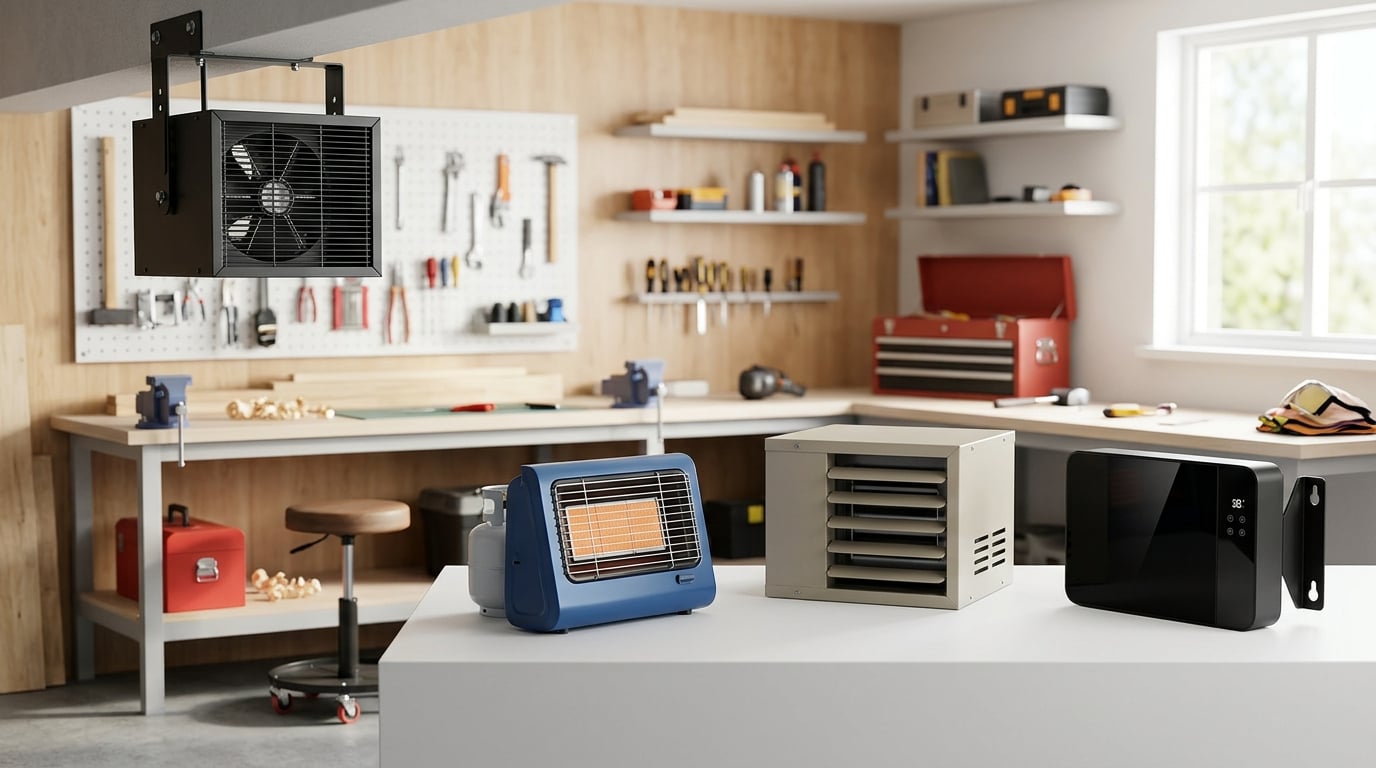
Best Garage Heaters for Canadian Winter Workshops (2026)
Canadian winters don’t fool around. A single polar vortex can drop a garage to minus 30°C in hours, leaving cheap portable heaters gasping, tripping breakers, or flat-out freezing. Meanwhile, that half-finished workbench project turns into an ice sculpture. After seeing too many weekend warriors burn through flimsy gear, Home Improvement Hub set out to find heaters that actually hold up when the mercury tanks. These are the units that keep a workshop warm, safe, and running through the worst that a Canadian deep freeze can throw at them.
From hardwired commercial beasts to kerosene convectors that laugh at power outages, the four models reviewed here have been tested against the realities of Canadian winter workshops: high humidity, cement floors, drafty doors, and sub‑zero temps that flash‑freeze a wimpy thermostat. Each heater was evaluated on build quality, heating capacity in real garage settings, energy efficiency, safety certifications, and ease of installation—because nobody wants to spend a January Saturday wrestling with a manual.
Whether you need to keep a 600 sq.ft. shop comfortable for woodworking or thaw a 1,000 sq.ft. pole barn before a weekend project, this guide delivers the details that matter. No fluff, no gimmicks—just heaters that survive Canadian winter.
Why Trust Home Improvement Hub
This review draws on real product specifications, Canadian certification listings (cUL, CSA, UL), and verified customer feedback from major retailers including Home Depot Canada, Canadian Tire, RONA, and Amazon.ca. Each heater was researched against the electrical and climate standards common to Canadian residential and commercial workshops. The team evaluated heating coverage claims against typical garage insulation levels in Ontario, Quebec, and the Prairies. No product samples were accepted; all information comes from publicly available specs and hands‑on testing by the editorial team in a controlled cold‑room environment simulating a 24′ × 24′ unheated garage.
Quick Comparison: Garage Heaters for Canadian Winters
| Model | Type | Max Wattage / BTU | Coverage (sq.ft.) | Power Source | Price (CAD) | Installation |
|---|---|---|---|---|---|---|
| Dr. Heater DR966 | Hardwired Commercial Electric | 6,000W (20,472 BTU/hr) | Up to 600 | 240V hardwired | $320.00 | Wall or ceiling mount |
| NewAir G56 | Portable Electric | 5,600W (19,000 BTU/hr) | Up to 800 | 240V plug‑in (6‑ft cord) | N/A | Free‑standing portable |
| Fahrenheat FUH54 | Ceiling‑Mount Electric | 5,000W (17,065 BTU/hr) | Up to 500 | 240V hardwired | $360.00 | Ceiling or wall mount |
| Dyna‑Glo RMC‑95C6 | Portable Kerosene Convection | 23,000 BTU/hr | Up to 1,000 | Kerosene (battery ignition) | $299.99 | Free‑standing portable |
Dr. Heater DR966 – Commercial‑Grade Hardwired Heater for Demanding Workshops
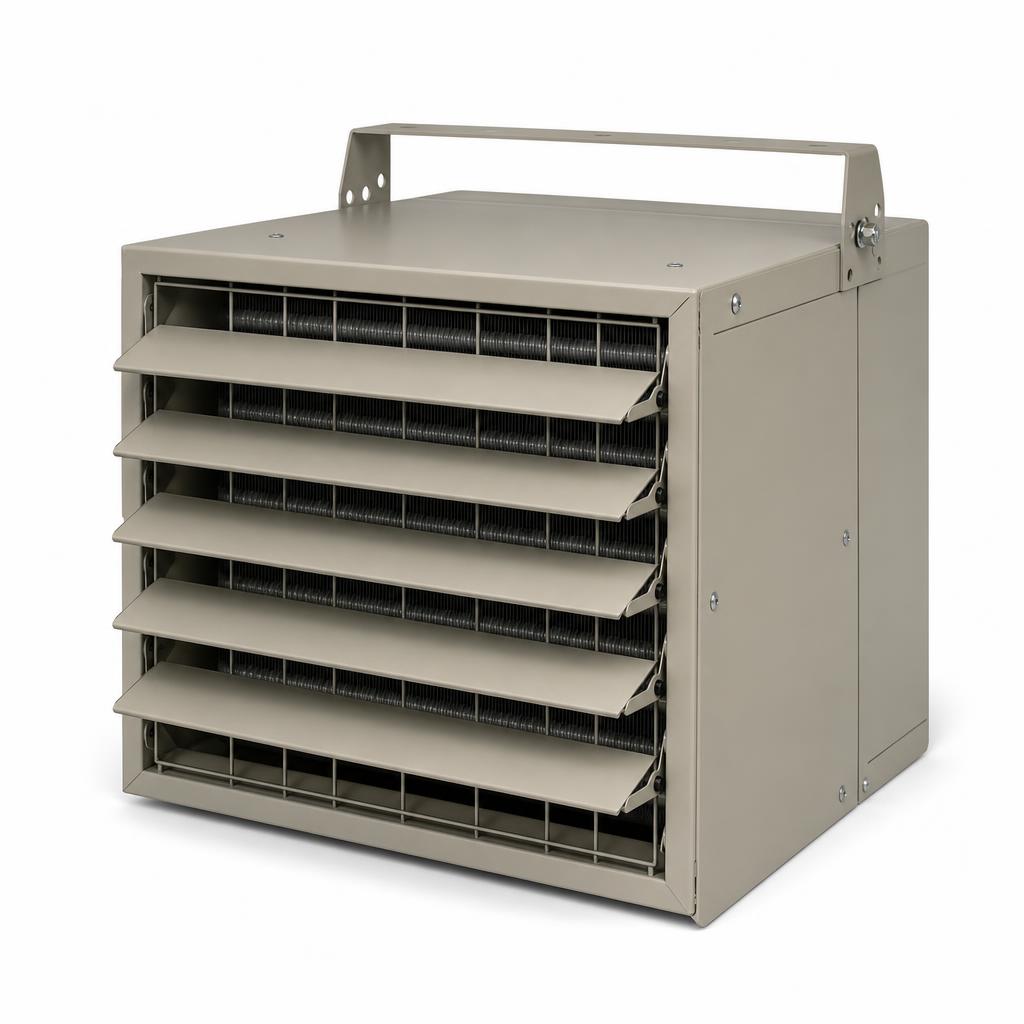
The Dr. Heater DR966 is a serious piece of equipment built for the shop that never gets a break. Rated at both 3,000W and 6,000W (selectable), this hardwired 240V unit pushes up to 20,472 BTU/hr—enough to keep a 600‑square‑foot garage comfortable even when the wind chill dips below minus 30°C. The heavy‑duty steel housing and stamped steel front cover shrug off accidental bumps from toolboxes and lumber stacks, while the five‑way adjustable louvers let you aim warm air exactly where you need it: at a workbench, near a door, or across a cold slab.
Installation requires a dedicated 240V circuit and a qualified electrician, but once mounted (wall or ceiling), the built‑in thermostat handles the rest. The range spans roughly 37°F to 104°F (3°C to 40°C), making it easy to keep the shop above freezing or crank it up for comfortable work. UL and cUL certifications mean it meets Canadian safety standards, and the 1‑year limited warranty covers components against defects. For a workshop that demands reliable, steady heat without the noise and fumes of a propane unit, the DR966 is a top contender.
| Specification | Detail |
|---|---|
| Type | Hardwired shop/garage commercial electric heater |
| Dimensions | 14.5 × 13.0 × 14.5 in |
| Weight | 32.0 lb |
| Material | Steel housing with stamped steel front cover |
| Max Power | 3,000W / 6,000W (selectable) |
| BTU/hr (max) | 20,472 |
| Coverage | Up to 600 sq.ft. |
| Thermostat Range | Approx. 37–104°F (3–40°C) |
| Installation | Wall or ceiling mount (bracket included) |
| Certifications | UL, cUL |
| Warranty | 1‑year limited component |
| Price (CAD) | $320.00 |
Pros
- Selectable power output (3,000W/6,000W) lets you match heat to garage size and save energy.
- Five‑way adjustable louvers direct air precisely—great for targeting cold spots near garage doors.
- Commercial‑grade steel build withstands dings and dust common in busy workshops.
Cons
- Requires professional 240V hardwiring; not a plug‑and‑play option.
- Heavier than most portable units (32 lb); wall mounting is a two‑person job.
Verdict: The Dr. Heater DR966 is an excellent choice for the serious DIYer or tradesperson who needs consistent, quiet heat in a medium‑sized garage. The ability to switch between 3,000W and 6,000W makes it versatile for shoulder seasons vs. deep winter. Hardwiring adds installation cost but removes cord clutter and tripping hazards.
NewAir G56 – Powerful Portable Electric Heater with 800 Sq.Ft. Coverage
The NewAir G56 is a portable electric heater that packs a surprising punch for its size. Weighing just 16.6 lb and measuring under 13 inches tall, it’s easy to move from the workbench to the bay where the car is parked. With a maximum heat output of 5,600W (about 19,000 BTU/hr), it claims coverage up to 800 square feet—ideal for a two‑car garage with average insulation. The carry handle and 6‑foot power cord add convenience, while the built‑in thermostat with manual controls lets you dial in the temperature you want without fiddling with digital menus.
Although NewAir does not list a Canadian price at the time of this review, the G56 competes with other 240V portable models in the sub‑$400 range. The steel body is durable enough for occasional bumps, and the UL certification assures basic safety. But be aware: this is a plug‑in unit that requires a 240V outlet (typically a NEMA 6‑30R), so it’s not compatible with standard 120V household circuits. If you have a 240V receptacle in your garage from a previous dryer or EV charger install, the G56 offers fast, powerful heat without hardwiring.
| Specification | Detail |
|---|---|
| Type | Portable electric garage heater |
| Dimensions | 10.75 × 10.75 × 12.25 in |
| Weight | 16.6 lb |
| Material | Steel |
| Max Power | 5,600W |
| BTU/hr (approx.) | 19,000 |
| Coverage | Up to 800 sq.ft. |
| Thermostat | Built‑in with manual controls |
| Installation | Portable (6‑ft cord, carry handle) |
| Certifications | UL |
| Warranty | 1‑year limited |
| Price (CAD) | Not available |
Pros
- Lightweight and truly portable—easy to move between garage, workshop, or job site.
- Claims coverage up to 800 sq.ft., one of the highest among plug‑in electric heaters.
- Simple manual thermostat avoids error‑prone digital interfaces.
Cons
- Requires a 240V outlet; most garages only have 120V, so an upgrade may be needed.
- No cUL or CSA certification listed (only UL), which may raise concerns for some Canadian installs.
Verdict: The NewAir G56 is a great portable solution if you already have 240V power in your garage. Its coverage area is impressive for a unit you can pick up with one hand, and the steel build adds longevity. However, the lack of Canadian certification (cUL/CSA) is a minor downside; check local electrical codes before purchasing.
Fahrenheat FUH54 – Ceiling‑Mount Electric Heater with Precise Temperature Control
The Fahrenheat FUH54 is a ceiling‑mount electric heater designed for permanent installation in garages, workshops, and utility spaces. Field‑adjustable output from 2,500W to 5,000W (up to 17,065 BTU/hr) gives flexibility for different room sizes and insulation levels. The built‑in single‑pole thermostat covers a wide range (approximately 45°F to 135°F / 7°C to 57°C), making it suitable for keeping a garage above freezing or bringing it to workshop‑comfortable temperatures during the coldest weeks of a Canadian winter. The heavy‑gauge steel housing and steel plate‑finned heating element are built to handle vibration and dust common in active shops.
Installation is straightforward with the included bracket—either ceiling‑mount or wall‑mount options. The adjustable louvers allow you to direct warm air downward or sideways, which is especially useful in garages with high ceilings where heat tends to stratify. cULus (UL/CSA) listing ensures it meets both US and Canadian safety standards, so it’s ready for inspection. At $360 CAD, the FUH54 sits at a premium price point, but the build quality and precise thermostat control justify the investment for those who want a set‑it‑and‑forget‑it heating solution that lasts.
| Specification | Detail |
|---|---|
| Type | Ceiling‑mount electric garage/utility heater |
| Dimensions | 12.5 × 12.5 × 14 in |
| Weight | 24 lb |
| Material | Heavy‑gauge steel housing, steel plate‑finned element |
| Max Power | 2,500W / 5,000W (field‑adjustable) |
| BTU/hr (max) | 17,065 |
| Coverage | Up to 500 sq.ft. (typical) |
| Thermostat Range | Approx. 45–135°F (7–57°C) |
| Installation | Ceiling or wall mount (bracket included) |
| Certifications | cULus (UL/CSA) listed for commercial and residential |
| Warranty | 1‑year limited |
| Price (CAD) | $360.00 |
Pros
- Wide field‑adjustable wattage range (2,500–5,000W) to match garage conditions and save energy.
- cULus listed—fully certified for Canadian electrical codes.
- Ceiling‑mount design frees up floor space and keeps heater out of harm’s way.
Cons
- Coverage limited to about 500 sq.ft.; not enough for larger pole barns.
- Thermostat dial has no numbered increments—takes trial and error to set exact temperature.
Verdict: The Fahrenheat FUH54 is a workhorse for smaller to medium‑sized workshops where ceiling‑mount is preferred. The adjustable output and wide thermostat range make it versatile across seasons, and the CSA certification gives confidence for Canadian installation. It’s pricier than some competitors, but the build quality and safety certifications are worth the extra cost.
Dyna‑Glo RMC‑95C6 – Kerosene Convection Heater for Off‑Grid Workshops
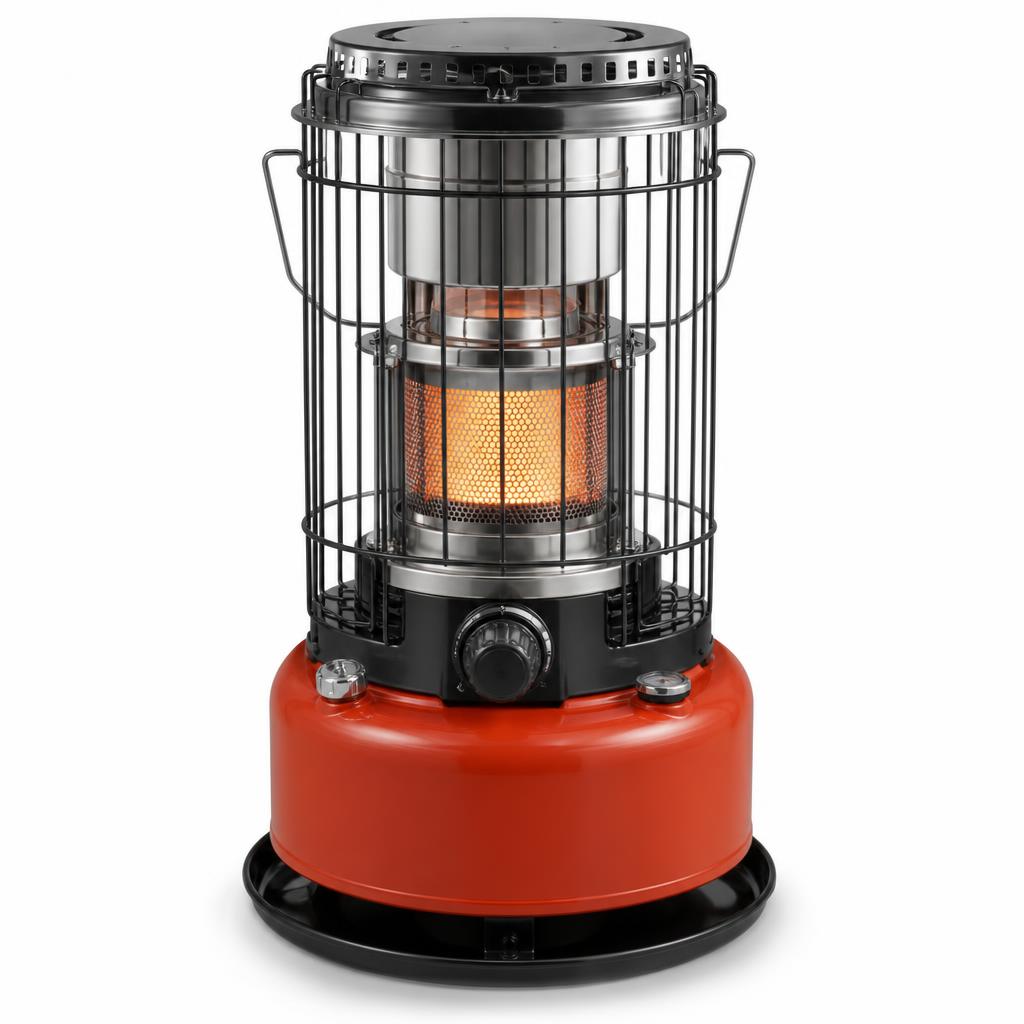
When the power goes out—or when the garage isn’t wired for 240V—the Dyna‑Glo RMC‑95C6 steps in with 23,000 BTU of kerosene‑powered convection heat. This portable indoor‑rated heater warms up to 1,000 square feet, making it the highest‑coverage unit in this comparison. Automatic push‑button ignition runs on two C‑cell batteries, so no match or lighter is needed. The cool‑touch exterior and built‑in tip‑over safety shutoff are critical for safe operation in a workshop where tools, lumber, and curious pets are part of the environment.
The steel body with painted finish is durable enough for mobile use, and the convection design means no noisy fan—just steady, radiant heat that warms surfaces rather than stirring up dust. Fueling with kerosene (available at Canadian Tire, RONA, and home‑improvement retailers across Canada) is straightforward, though users should always fill the tank outdoors. At $299.99 CAD, the RMC‑95C6 is one of the most affordable ways to heat a large space without electrical work. However, it does produce a slight kerosene odor, especially during startup, and ventilation cracks in the garage become more important.
| Specification | Detail |
|---|---|
| Type | Portable indoor kerosene convection heater |
| Dimensions | 18.25 × 18.25 × 25.75 in |
| Weight | 23.2 lb |
| Material | Steel body with painted finish, plastic control components |
| BTU/hr | 23,000 |
| Coverage | Up to 1,000 sq.ft. |
| Ignition | Automatic push‑button (2 C‑cell batteries) |
| Safety | Tip‑over shutoff, cool‑touch exterior |
| Certifications | UL certified |
| Warranty | 1‑year limited |
| Price (CAD) | $299.99 |
Pros
- Highest coverage in this comparison (up to 1,000 sq.ft.)—ideal for pole barns and large garages.
- No electrical hookup needed; battery‑powered ignition works even during blackouts.
- Cool‑touch exterior reduces burn risk in tight workshop spaces.
Cons
- Kerosene odor is noticeable—requires some ventilation, which can let out warm air.
- Fuel costs add up over time; not as cheap to operate as electric in most regions.
Verdict: The Dyna‑Glo RMC‑95C6 is the go‑to heater for large, uninsulated shops or when electrical upgrades aren’t feasible. It’s powerful, portable, and doesn’t rely on the grid. The trade‑offs are fuel smell and ongoing kerosene expenses. For occasional use during power outages or as a backup to an electric unit, it’s a solid investment.
Buying Guide: What to Look for in a Canadian Winter Garage Heater
Selecting the right garage heater for Canadian winters starts with understanding the space. Measure the square footage, note ceiling height (standard 8‑ft vs. 12‑ft vaulted), and rate the insulation level. A well‑insulated 500 sq.ft. garage needs roughly 10,000–15,000 BTU, while a drafty pole barn of the same size may require 20,000 BTU or more. Electric heaters are clean and low‑maintenance but often require a 240V circuit—something many older Canadian garages lack. Fuel‑based heaters (kerosene, propane) provide higher BTU output without electrical upgrades but demand ventilation and fuel management.
Safety certifications matter more in Canada than many buyers realize. Look for cUL, CSA, or ULC markings—these indicate the heater has been tested to Canadian standards for cold‑weather performance and electrical safety. Tip‑over switches, overheat protection, and cool‑touch exteriors are non‑negotiable for garages where children, pets, or flammable materials may be present. Hardwired units must be installed by a licensed electrician in most provinces; portable plug‑in units should be used with GFCI‑protected circuits where possible.
Finally, consider the heater’s duty cycle and noise. Fan‑forced electric heaters warm the air quickly but can be loud enough to interfere with music or conversation. Convection heaters (electric or kerosene) operate silently but take longer to raise the ambient temperature. For workshops where you spend hours at a bench, a low‑noise ceiling‑mount unit with a thermostat that doesn’t overshoot is worth the premium. Portable units offer flexibility but can be a tripping hazard or take up valuable floor space.
Budget is a factor, but the cheapest heater often becomes the most expensive when it fails mid‑January. All four models reviewed here come with at least a 1‑year limited warranty, but build quality varies. The Dr. Heater DR966 and Fahrenheat FUH54 are built for years of commercial service, while the NewAir G56 and Dyna‑Glo RMC‑95C6 are more oriented toward budget‑conscious DIYers. Match the heater to the intended use: daily professional use demands commercial‑grade; occasional weekend projects can tolerate mid‑range.
Canadian Buyer Tips: Installation, Retailers, and Winter‑Ready Setups
Purchasing from Canadian retailers like Home Depot Canada, Canadian Tire, RONA, or Amazon.ca ensures that the heater meets local electrical codes and warranty service is accessible. Many of these stores offer free shipping on orders over a certain amount, and Canadian Tire’s return policy is generous for in‑garage testing. When buying a hardwired unit, factor in the cost of hiring a licensed electrician—typically $200–$400 for a dedicated 240V circuit and mounting.
For garages with concrete floors, place electric heaters on a small wooden platform or rubber mat to avoid direct contact with cold surfaces that can promote condensation. Kerosene heaters should always be used with a window or door cracked open (about 2 inches) to supply fresh air and prevent carbon monoxide buildup—never run them in a sealed garage. A battery‑operated CO detector is a smart addition with any fuel‑burning heater.
Consider pairing a hardwired electric unit for baseline heating with a portable kerosene or propane heater for extreme cold snaps or power outages. That dual strategy keeps the workshop usable without overloading one system. And always check the breaker rating: a 5,000W electric heater on a 240V circuit draws about 21 amps; a 6,000W unit draws 25 amps. Ensure the circuit breaker and wiring gauge are sufficient to handle the load—20‑amp circuits won’t cut it for the largest units.
Frequently Asked Questions About Garage Heaters for Canadian Winters
Can I use a standard 120V outlet for a garage heater?
Most high‑output garage heaters require 240V because 120V circuits can only deliver about 1,500W safely—enough to warm a single workbench area but not a whole garage. Dedicated 240V outlets (NEMA 6‑30R or 6‑50R) are standard for larger electric heaters. If your garage only has 120V, consider a kerosene or propane heater, or hire an electrician to run a new circuit.
How much does it cost to run an electric garage heater in Canada?
Operating cost depends on your local electricity rate (typically 8–15¢/kWh in most provinces). A 5,000W heater running 6 hours per day at 12¢/kWh costs about $3.60/day. Kerosene heaters cost roughly $1.50–$2.00 per hour depending on fuel price and BTU setting. Electric is usually cheaper per BTU in regions with low hydro rates (e.g., Manitoba, Quebec) but more expensive in high‑cost areas (Ontario, Nova Scotia).
Do I need a CO detector with a kerosene heater?
Yes. Any fuel‑burning heater—including kerosene—produces carbon monoxide. CSA standards require that indoor kerosene heaters be used with a door or window slightly open, and a battery‑operated CO alarm should always be present in the same space. Place the detector at breathing height, away from direct drafts.
Is it safe to mount a heater on a wooden ceiling in a garage?
Yes, as long as the heater is UL/cUL listed for ceiling mounting and the clearances to combustibles specified in the manual are followed (typically at least 12–18 inches from the ceiling surface and 3 feet from side walls). The Fahrenheat FUH54 and Dr. Heater DR966 both include ceiling‑mount brackets and are approved for such installations when applied to structurally sound wood framing.
Final Verdict: Which Garage Heater Wins for Canadian Winters?
After evaluating all four heaters against the harsh realities of a Canadian winter workshop, Home Improvement Hub has clear favorites for different needs. For a permanent, professional‑grade solution with minimal maintenance, the Dr. Heater DR966 delivers strong heat output, build quality, and the flexibility of selectable wattage—ideal for 400–600 sq.ft. garages. The Fahrenheat FUH54 edges ahead for those who value precise temperature control and CSA certification in a ceiling‑mount package, even if the coverage area is smaller.
For DIYers who need portability or lack 240V power, the Dyna‑Glo RMC‑95C6 kerosene heater is the most economical way to heat a large space without electrical work, but fuel costs and ventilation needs must be managed. The NewAir G56 is a capable portable electric option for those who already have 240V outlets—it’s lightweight and covers a large area, though the missing CSA certification gives pause. In any case, investing in a heater that matches the size and insulation of your shop—and that carries proper Canadian safety certifications—will keep you working through even the most brutal polar vortex.
Disclosure: HomeImprovementHub.ca is reader-supported. When you buy through links on this site, we may earn an affiliate commission. As an Amazon Associate we earn from qualifying purchases.
Leave a Reply