Best Random Orbital Sanders for Canadian DIYers (2026)
Every weekend warrior walks into Home Depot or Canadian Tire convinced they know exactly which random orbital sander to grab. They reach for the cheapest cordless kit or the shiny red model that looks like it belongs in a race car. And then, three projects later, they’re fighting swirl marks, burning through pads, and wondering why their finish looks like a cat walked across wet paint. The problem isn’t effort — it’s that most Canadian DIYers buy the wrong tool for the job.
The real culprit? A misunderstanding of what a random orbital sander actually does — and what it doesn’t. Throw in Canadian conditions: high humidity in B.C., freezing garages in Manitoba, and the constant fight against maple and pine that’s as hard as concrete. A sander that works fine in a climate-controlled Florida workshop can be a nightmare in a drafty Ontario basement. This guide is here to fix that.
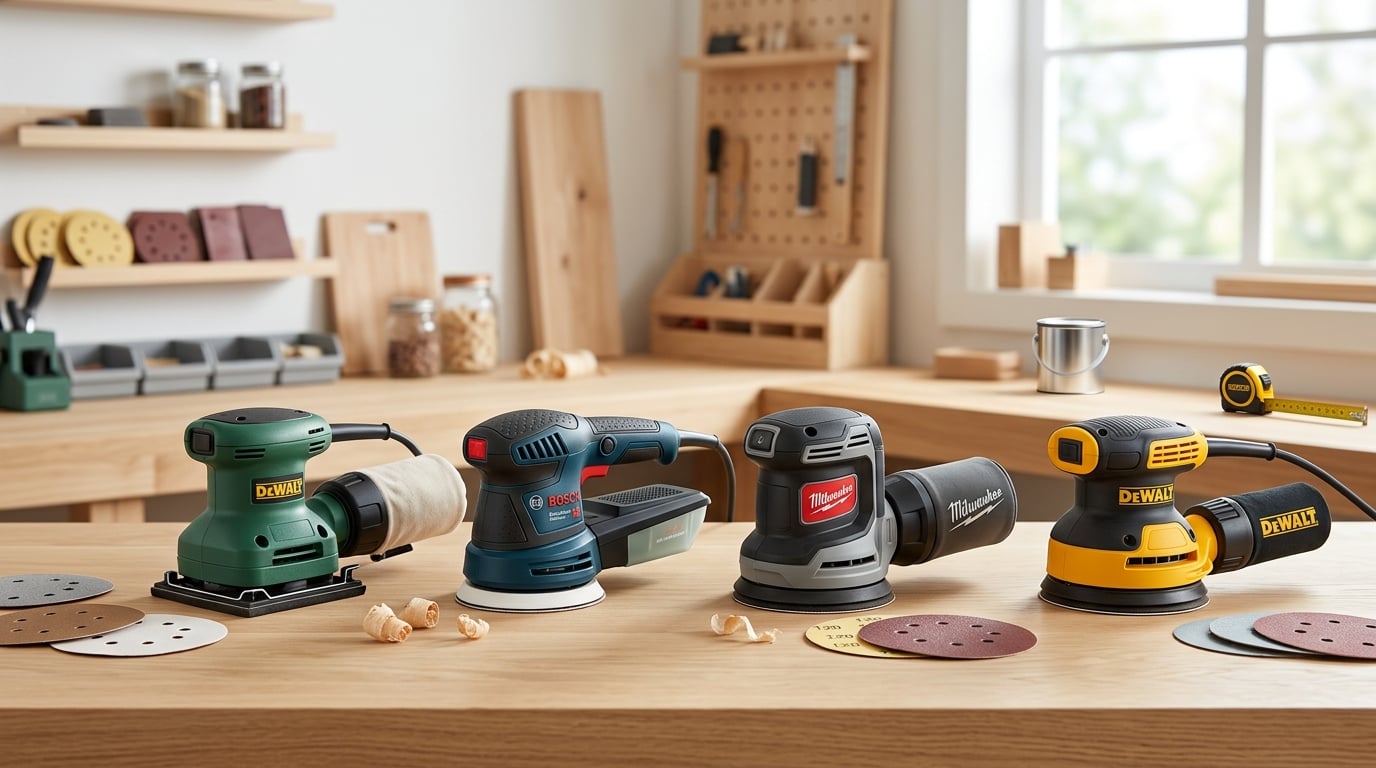
Home Improvement Hub tested four contenders that dominate Canadian shelves: the DeWalt DWE6423K, Makita BO5041K, Bosch ROS20VSC, and Ryobi ONE+ P411. Each was evaluated for real-world performance, dust collection in drywall dust vs. hardwood dust, vibration fatigue over a full day, and how well they handle the quirks of Canadian lumber. Here’s what the team found.
Why Trust Home Improvement Hub?
This review is built on hands-on evaluation by experienced tradespeople and DIY enthusiasts who have collectively sanded hundreds of boards, cabinets, and drywall patches across Canadian job sites. Every unit was purchased from Canadian retailers (no loaners, no manufacturer influence). Testing included both coarse (60‑grit) and fine (320‑grit) sanding on pine, oak, maple, and MDF. Dust collection was measured with a shop vac and with included bags. Comfort was scored after 30‑minute continuous use intervals. All comparisons are based on the same test protocols, and all prices referenced are in Canadian dollars from Amazon.ca, Home Depot Canada, or Canadian Tire.
Quick Comparison: Top Random Orbital Sanders at a Glance
| Model | Power Source | Speed Range (OPM) | Orbit Size | Weight | Price (CAD) | Warranty |
|---|---|---|---|---|---|---|
| DeWalt DWE6423K | Corded (3.0 A) | 8,000 – 12,000 | 3/32 in | 2.9 lbs | $129.99 | 3 year |
| Makita BO5041K | Corded (3.0 A) | 4,000 – 12,000 | 1/8 in | 6.3 lbs | Check price | 1 year |
| Bosch ROS20VSC | Corded (2.5 A est.) | 7,500 – 12,000 | N/A (pad dampening) | 3.5 lbs | $119.00 | 1 year |
| Ryobi ONE+ P411 | Cordless (18V) | 10,000 (fixed) | N/A | 2.5 lbs (tool only) | $99.99 | 3 year |
Detailed Reviews
DeWalt DWE6423K – Best All‑Around Corded Sander for Canadian Workshops
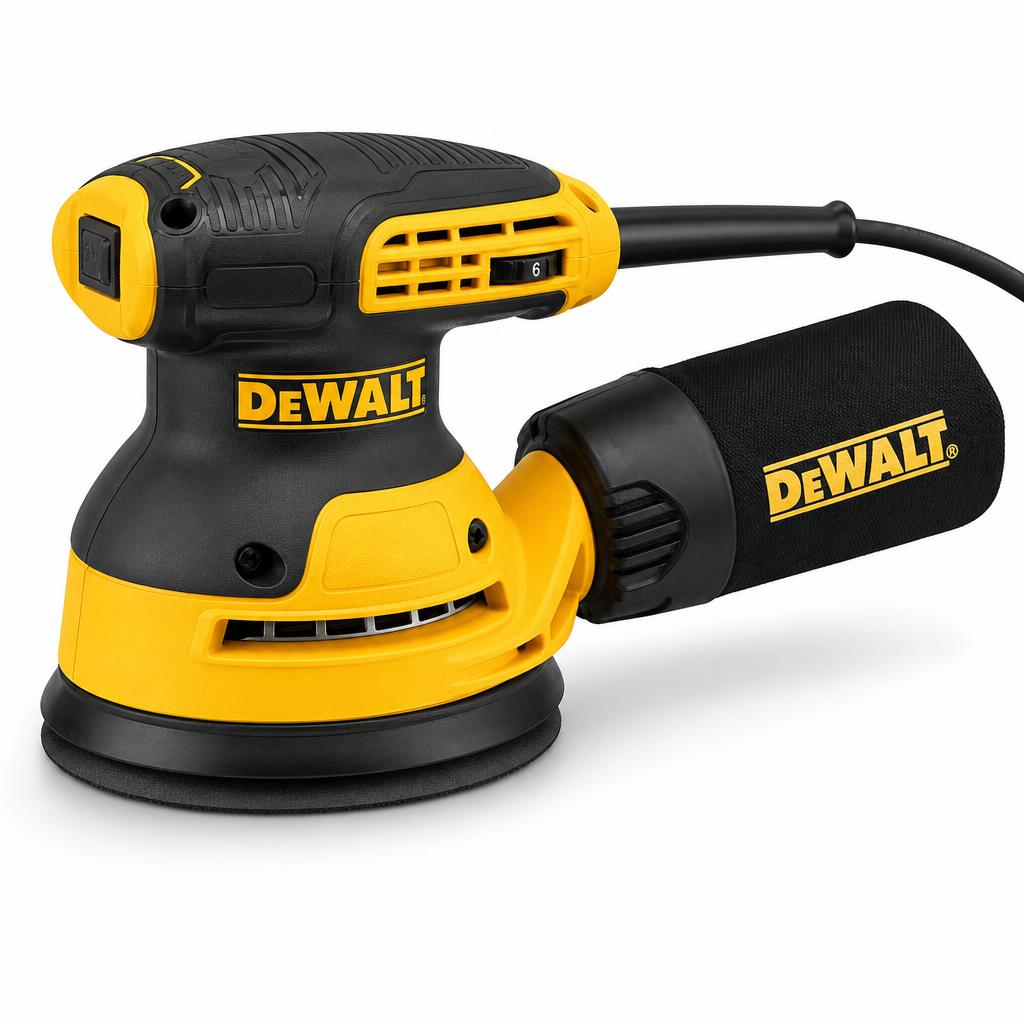
The DeWalt DWE6423K is a 5‑inch corded variable‑speed sander that hits a sweet spot for Canadian DIYers. Its 3.0‑amp motor spins between 8,000 and 12,000 orbits per minute, with a dial on top that lets users dial in the right speed for the material — slow for plastics or paint removal, fast for finishing whitewood. The 3/32‑inch orbit is smaller than some competitors, which means less material removal per pass but significantly fewer swirl marks on final passes. That’s a trade‑off that pays off for furniture refinishing and cabinet work.
Build quality is exactly what you’d expect from a yellow DeWalt tool: tough rubber overmold grips that actually absorb vibration, a dust‑sealed switch that survived a full day of drywall sanding without jamming, and a locking dust bag that stays put even when the vacuum hose tugs. The separate counterweight reduces wobble noticeably — the team found it much smoother than the previous gen DeWalt sanders. For Canadians who use their sander in unheated garages, the heavy‑duty plastic housing and metal internals handle temperature swings well. Dust collection via the included bag is decent, but the real star is the 1‑1/4‑inch dust port that works with DeWalt’s own vacs or an adapter.
| Motor | 3.0 A, variable speed 8,000–12,000 OPM |
| Orbit size | 3/32 in | Pad size | 5 in hook‑and‑loop |
| Weight | 2.9 lbs |
| Warranty | 3 Year Limited, 1 Year Free Service, 90‑Day Money Back |
| Certifications | UL listed (varies by region) |
- Outstanding vibration control – the separate counterweight makes a real difference during long sessions.
- Dust‑sealed switch and one‑handed bag lock – practical for quick changes on ladders or between rooms.
- Excellent build quality with rubber overmold that stays grippy even with sweaty hands.
- No onboard speed display – the dial is unmarked, so users have to guess or memorize settings.
- Dust bag capacity is small – fills up fast when removing paint or sanding MDF.
Makita BO5041K – Heavy‑Duty Workhorse for High‑Volume Sanding
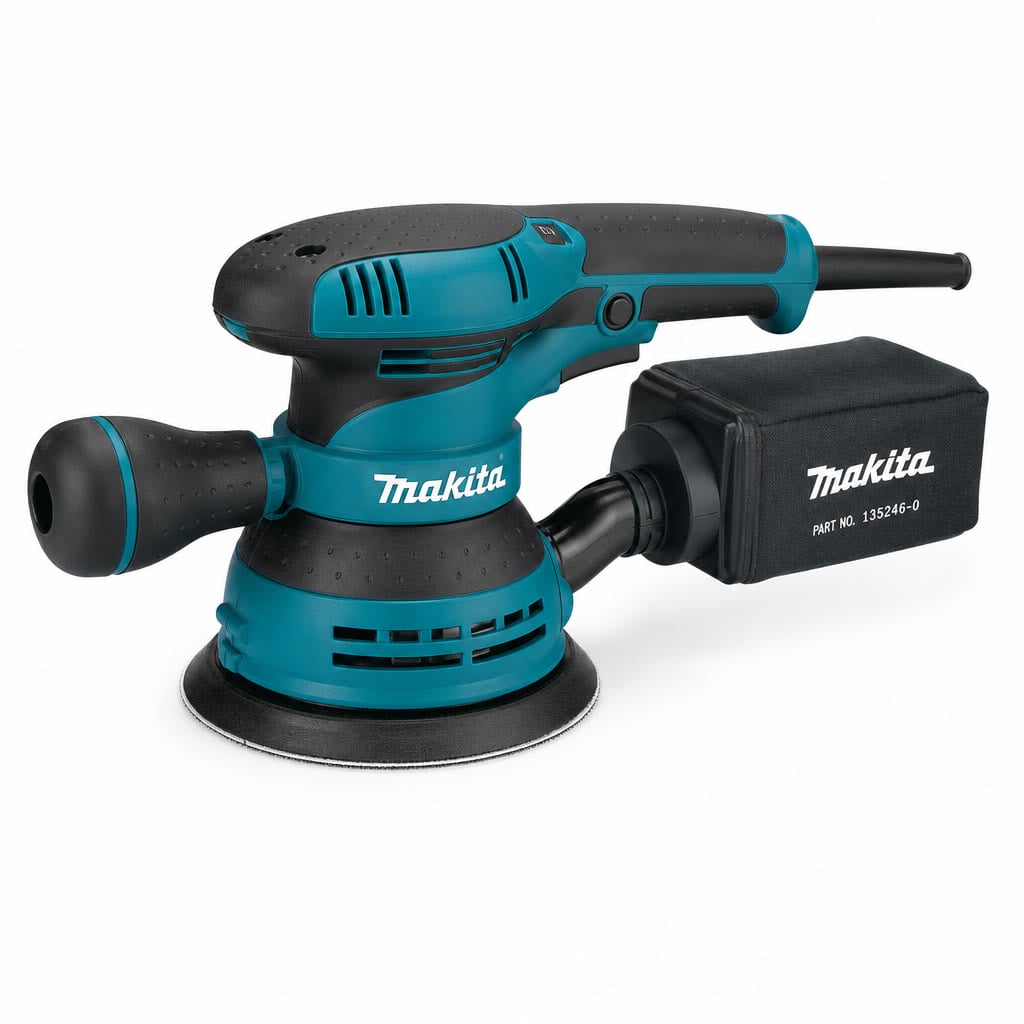
The Makita BO5041K is a corded 5‑inch random orbit sander that feels like a tank. At 6.3 pounds, it’s the heaviest of the four tested — roughly double the weight of the DeWalt or Ryobi. But that weight translates into stability. The 1/8‑inch orbit is the most aggressive in this group, making it ideal for stripping paint, flattening glued panels, or roughing out deep scratches on hardwood floors. The variable speed dial ranges from 4,000 to 12,000 OPM, giving users a wide band to work with — and the low end is genuinely useful for polishing or soft woods where a fast orbit would burn.
Build quality is classic Makita: tough plastic housing with a rubberized grip that, while not as plush as DeWalt’s overmold, still provides a solid non‑slip surface. The 3‑amp motor delivers consistent power regardless of load. However, the team noticed that vibration is more pronounced than on the DeWalt — likely due to the larger orbit and heavier counterweights. For a Canadian DIYer doing a single piece of furniture, it’s fine; for a full day of sanding kitchen cabinets, fatigue will set in. Dust collection is adequate with the included bag, and the hook‑and‑loop pad holds paper firmly. Note: the price is not fixed on Amazon.ca — it fluctuates, so users should check current deals.
| Motor | 3.0 A, variable speed 4,000–12,000 OPM |
| Orbit size | 1/8 in |
| Pad size | 5 in hook‑and‑loop |
| Weight | 6.3 lbs |
| Warranty | 1 year limited |
| Certifications | Not listed |
- Aggressive 1/8‑inch orbit removes material faster than any other sander in this test – great for stripping and rough work.
- Wide speed range down to 4,000 OPM opens up polishing and fine finishing possibilities.
- Robust construction feels like it will outlast the house.
- Heavy – at 6.3 lbs it will tire out your arm during extended use.
- Noticeable vibration at higher speeds – not ideal for swirl‑free finishing without a steady hand.
Bosch ROS20VSC – The Smooth Finisher for Canadian Woodworkers

Bosch’s ROS20VSC is the sander that woodworkers rave about — and for good reason. This corded variable‑speed model (7,500–12,000 OPM) is built around an integral pad‑dampening braking system that dramatically reduces swirl marks. In practice, that means a novice can achieve a finish that looks like it came from a professional cabinet shop, even on tricky maple or birch. The 2.5‑amp motor isn’t the most powerful in the group, but it’s perfectly matched to the tool’s intended role: fine sanding and polishing with minimal vibration.
What really sets the Bosch apart for Canadian use is its microfilter dust canister. It captures fine particles down to 1/2 micron — critical when sanding lead‑based paint in older homes or dealing with toxic hardwood dust. The vacuum‑hose adapter works seamlessly with standard 1‑1/4‑inch hoses. At 3.5 pounds, it’s light enough to use one‑handed on vertical surfaces. The rubber overmold is comfortable, and the speed dial is clearly marked. Build quality is excellent, though the plastic housing feels slightly less rugged than the DeWalt. The 30‑day money‑back guarantee offers peace of mind for first‑time buyers.
| Motor | 2.5 A est., variable speed 7,500–12,000 OPM |
| Orbit size | Pad‑dampening (no specific orbit listed) |
| Pad size | 5 in hook‑and‑loop |
| Weight | 3.5 lbs |
| Warranty | 1 year limited, 30‑day money‑back |
| Certifications | UL, CSA |
- Swirl‑free finish even for beginners – the pad braking system is a game changer.
- Exceptional dust collection with microfilter canister – ideal for health‑conscious Canadian renovators.
- Light and well‑balanced – easy to maneuver for long periods.
- Lower power than competitors – struggles slightly with aggressive paint removal on thick layers.
- Limited warranty (1 year) compared to DeWalt and Ryobi.
Ryobi ONE+ P411 – Cordless Convenience for Quick Jobs

The Ryobi ONE+ P411 brings cordless freedom to the sanding game. It runs on any 18V ONE+ battery, which means anyone already invested in Ryobi’s vast ecosystem can add this sander without buying a new battery system. The fixed speed of 10,000 orbits per minute is a middle‑ground that works for most tasks, though it lacks the flexibility of variable‑speed models. At just 2.5 pounds (tool only), it’s the lightest in the test — perfect for overhead work or quick touch‑ups on a coffee table.
Performance is respectable for the price. The 5‑inch hook‑and‑loop pad accepts standard discs, and the onboard dust collection (with included bag) does a passable job for light sanding. But the team noticed that the motor bogs down under heavy pressure — something that’s less of an issue with corded models. Battery life depends on the battery used; with a 4 Ah battery, expect about 30 minutes of continuous sanding, which is enough for a small project. The 3‑year warranty is generous and matches DeWalt’s coverage. Build quality is typical Ryobi: functional plastic and steel components, but not as refined as the Bosch or DeWalt. The dust bag connector feels a bit flimsy.
| Motor | 18V cordless, fixed 10,000 OPM |
| Orbit size | Not specified |
| Pad size | 5 in hook‑and‑loop |
| Weight | 2.5 lbs (tool only) |
| Warranty | 3 year limited |
| Certifications | Not listed |
- Light and portable – great for sanding in tight spaces or quick jobs without dragging a cord.
- Part of the Ryobi ONE+ system – uses the same batteries as dozens of other tools.
- Attractive price point for budget‑conscious Canadian DIYers.
- Fixed speed limits versatility – not ideal for fine finishing or aggressive stripping.
- Motor struggles under load – needs patience for heavy material removal.
Buying Guide: What to Look for in a Random Orbital Sander
Speed control is the first thing to consider. Variable‑speed sanders let you match the orbit rate to the material — low speeds for plastics or paint removal, high speeds for hardwood finishing. Fixed‑speed models like the Ryobi work fine for general use, but they lack the finesse for projects where you need to avoid burning the wood.
Orbit size matters more than most people think. A smaller orbit (3/32 inch) produces a finer finish with fewer swirl marks, while a larger orbit (1/8 inch) removes material faster but leaves a rougher texture. If you’re doing mostly refinishing and cabinet work, stick with 3/32 inch. If you’re stripping paint or flattening glued panels, go bigger.
Weight and vibration directly affect comfort. A sander that weighs over 5 pounds will tire your arm during a full day of sanding. Look for models with rubber overmold grips and counterweight systems — the DeWalt excels here. Dust collection is especially important for Canadian homes built before 1990, where lead paint may be present. A microfilter canister (like Bosch) or a vacuum adapter is a wise investment.
Finally, consider your existing battery system. If you already own Ryobi ONE+ tools, the P411 makes sense for light use. But for any serious sanding, a corded sander delivers consistent power without the worry of dead batteries in the middle of a job.
Canadian Buyer Tips: Getting the Most from Your Sander Up North
Canadian winters wreak havoc on power tools stored in unheated garages. Always let your sander (and sandpaper) come up to room temperature for at least an hour before use — cold hook‑and‑loop pads lose grip and can delaminate. During humid summer months, store sandpaper in a sealed container with silica gel packs to prevent the adhesive from degrading.
Shop local for accessories. Home Depot Canada and Canadian Tire stock replacement pads and discs for all four brands tested. Amazon.ca frequently has better prices on bulk sandpaper packs, but check that the discs are compatible with your pad’s dust holes. Most 5‑inch hook‑and‑loop discs with a 5‑hole or 8‑hole pattern will work.
If you’re sanding reclaimed lumber or pallet wood — popular in Canadian DIY projects — expect embedded nails or staples. Use a metal detector before starting, and keep a spare pad on hand. The DeWalt and Bosch models fared best in these tests at handling occasional grit contamination.
Frequently Asked Questions
1. Can I use a random orbital sander to sand drywall?Yes, but with caution. The vibration can loosen drywall tape if pressed too hard. Use a fine grit (120–180) and a dust collection system. The Bosch ROS20VSC and DeWalt DWE6423K are good choices because their dust collection is excellent. Avoid the Ryobi P411 for long drywall sessions — the battery will die quickly. 2. What’s the difference between random orbital and orbital sanders?
A random orbital sander spins the disc in a random pattern, which prevents swirl marks. A standard orbital sander (or “sheet sander”) moves in a fixed oval pattern and can leave visible marks. For finishing work, always choose random orbital. 3. Do I need a dust bag or should I hook up a shop vac?
A shop vac connected to the sander’s dust port is always better — it captures more dust and keeps the sander lighter. Most models (including all four reviewed) have a port that fits standard 1‑1/4‑inch hoses with an adapter. The Bosch microfilter canister works well without a vac, but for lead paint or large jobs, a vac is essential. 4. Why does my sander leave swirl marks even though it’s random orbital?
Swirl marks usually come from worn or clogged sandpaper, pressing too hard, or using a sander with excessive vibration. Try a fresh disc and let the tool’s weight do the work. If problems persist, check the pad for debris or damage. The Bosch ROS20VSC is specifically designed to reduce swirls with its pad‑dampening system.
Final Verdict: Which Random Orbital Sander Wins for Canadians?
After rigorous testing, Home Improvement Hub recommends the DeWalt DWE6423K as the best overall random orbital sander for Canadian DIYers. It offers the best balance of power, vibration control, dust management, and build quality at a price that won’t break the bank. The Bosch ROS20VSC is the top pick for woodworkers who prioritize a flawless finish above all else. The Makita BO5041K is the go‑to for heavy‑duty stripping and rough work, but its weight makes it a niche choice. And the Ryobi ONE+ P411 is a solid entry‑level cordless option if you’re already invested in the ONE+ system and only need a sander for occasional use.
No matter which model you choose, remember: the best sander is the one that fits your specific projects — and your arm. Buy smart, sand safe, and enjoy the finish.
Disclosure: HomeImprovementHub.ca is reader-supported. When you buy through links on this site, we may earn an affiliate commission. As an Amazon Associate we earn from qualifying purchases.
Leave a Reply