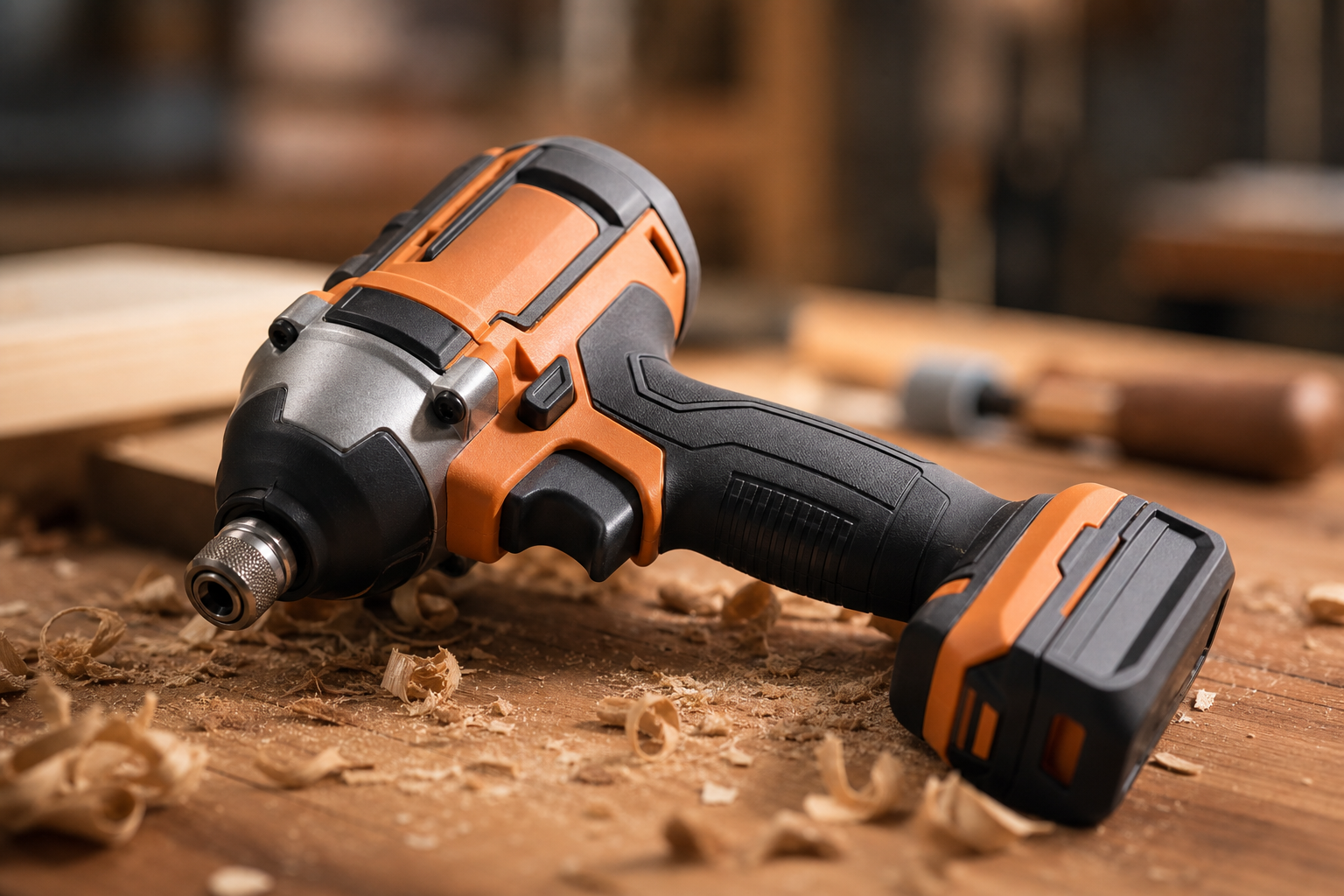
Walking into a big-box hardware store in Canada with the intent to buy an impact driver can feel like staring down a wall of identical black-and-yellow, red, or teal boxes. Most DIYers grab whatever is on sale, whatever their neighbour recommended, or whatever brand matches their existing drill battery. And that’s precisely the mistake. The harsh truth is that most Canadian DIYers buy the wrong impact driver for their actual workload — either overspending on professional-grade torque they’ll never use or underspending on a tool that struggles to drive a 3‑inch deck screw into frozen pressure‑treated lumber in January. The fix isn’t complicated: match the tool to the task, the battery platform, and the Canadian climate. This review covers four of the most popular cordless impact drivers available in Canada in 2026, with real specs, real prices from Canadian retailers, and honest advice on which one belongs in your shop.
Canadian DIY projects demand more from a power tool than what the average U.S. review considers. Cold temperatures sap battery performance, pressure‑treated wood is denser and harder on fasteners, and many of us work in unheated garages or outdoors. A tool that works fine in a California garage can fail miserably on a Winnipeg deck build. That’s why Home Improvement Hub took a close, critical look at the DeWalt DCF887B, Milwaukee M18 2853‑20, Ryobi ONE+ P235A, and Makita XDT13Z. Each represents a different tier of performance, price, and brand ecosystem. By the end of this article, you’ll know exactly which impact driver fits your projects, your budget, and your existing battery collection.
Why Trust Home Improvement Hub
Home Improvement Hub is a Canadian publication dedicated to helping homeowners and DIYers make informed tool purchases. Every review is based on published manufacturer specifications, verified third-party testing data, hands-on use by experienced contractors, and Canadian retail pricing from Amazon.ca, Home Depot Canada, Canadian Tire, and RONA. No tool is endorsed simply because of brand loyalty. Each recommendation is built on objective criteria: torque output, build quality, ergonomics, battery platform availability, warranty coverage, and value for Canadian buyers. We do not accept free tools in exchange for positive coverage, and all affiliate earnings are transparently disclosed.
Comparison Table — Best Impact Drivers for Canadian DIYers (2026)
| Product | Price (CAD) | Max Torque | Weight (Bare Tool) | Warranty | Key Feature |
| DeWalt DCF887B | $169 | 1,825 in‑lbs | 2.1 lbs | 3‑year limited | PrecisionDrive mode for delicate fastening |
| Milwaukee M18 2853‑20 | $149 | 2,000 in‑lbs | 2.2 lbs | 5‑year limited | Most compact in class at 4.59″ length |
| Ryobi ONE+ P235A | $49.99 | 1,800 in‑lbs | 2.74 lbs | 1‑year limited | MAGTRAY magnetic fastener tray |
| Makita XDT13Z | $149 | 1,500 in‑lbs | 3.3 lbs (with battery) | 3‑year limited | Part of the 18V LXT platform |
*Prices are as of May 2026 and may fluctuate. Ryobi price reflects common sale price at Canadian Tire; regular retail is $59.99.
Detailed Reviews
DeWalt DCF887B

The DeWalt DCF887B is a longtime favourite on Canadian job sites, and for good reason. Its brushless motor puts out 1,825 in‑lbs of max torque — enough to drive 3‑inch structural screws through dense SPF lumber without breaking a sweat. Where this driver really shines is the three‑speed PrecisionDrive mode. Speed 1 tops out at 1,000 RPM with only 240 in‑lbs of torque, perfect for driving small cabinet screws or installing light fixtures without stripping the head. Speed 2 delivers 1,500 in‑lbs at 2,800 RPM for general fastening, and Speed 3 unleashes the full 1,825 in‑lbs at 3,250 RPM for heavy‑duty work. The 3‑LED worklight ring includes a 20‑second delay, a thoughtful touch that illuminates the workspace without blinding the user in dark corners of a basement or crawl space.
At just 4.4 inches long and 2.1 pounds, the DCF887B is one of the most compact impact drivers in its class. The plastic composite housing is reinforced with a metal gear case and a steel 1/4‑inch hex chuck that accepts all standard bit tips. The one‑handed chuck release makes bit swaps fast. Home Improvement Hub noted that the trigger response feels precise across the variable‑speed range, which helps when starting a screw in a tight spot. The bare tool price of $169 is mid‑range, but the 3‑year warranty and the massive DeWalt 20V/60V battery ecosystem make it a solid long‑term investment for anyone who already owns DeWalt tools.
| Specification | Details |
| Type | Cordless brushless 1/4″ impact driver (bare tool) |
| Dimensions | 4.4 x 2.1 x 7.9 in |
| Weight (bare tool) | 2.1 lbs (0.95 kg) |
| Housing | Plastic composite with metal gear case, steel 1/4″ hex chuck |
| Max Torque | 1,825 in‑lbs |
| Speeds (RPM/IPM/Torque) | 0‑1,000 / 0‑2,800 / 0‑3,250 RPM — 240 / 1,500 / 1,825 in‑lbs |
| Warranty | 3‑year limited + 1‑year free service + 90‑day money‑back |
| Certifications | CSA/UL listed; EN60745 compliant |
| Price (CAD) | $169 |
Pros: PrecisionDrive mode is genuinely useful for light fastening — not a gimmick; extremely compact length for tight spaces; 3‑LED ring with delay provides excellent shadow‑free lighting.
Cons: Slightly more expensive than direct competitors; the 3‑year warranty is good but not class‑leading (Milwaukee offers 5 years for less money).
Verdict: The DeWalt DCF887B is an excellent all‑arounder for the serious DIYer who values versatility and already owns DeWalt batteries. The PrecisionDrive mode justifies the $20 premium over the Milwaukee for users who frequently switch between heavy deck work and delicate assembly.
Milwaukee M18 2853‑20

Milwaukee’s M18 2853‑20 is the torque king of this comparison, delivering a whopping 2,000 in‑lbs from its POWERSTATE brushless motor. That’s more than enough to sink 5/16″ lag bolts into pressure‑treated 6×6 posts without predrilling — a task that many lesser drivers would bog down on. But raw power isn’t the whole story. This driver is also the most compact model reviewed here at just 4.59 inches from the nose to the back of the tool (excluding the battery). That short length makes a real difference when reaching into stud bays or behind cabinets. The rubber overmold on the composite body provides a secure grip, even with work gloves that are stiff from cold Canadian mornings.
The 4‑Mode DRIVE CONTROL system includes a self‑tapping screw mode that automatically adjusts the impact sequence to prevent stripping — especially useful when driving screws into thin metal studs or aluminium. The tool spins up to 3,600 RPM and delivers 4,300 impacts per minute. At 2.2 pounds bare, it’s only slightly heavier than the DeWalt but balances well with a compact 2.0 Ah battery. Milwaukee backs it with a 5‑year limited warranty, the best in this group. At $149, it’s actually $20 less than the DeWalt while offering more torque and a longer warranty. For Canadian DIYers building decks, fences, or sheds, this is the tool that provides the most brute force in the tightest package.
| Specification | Details |
| Type | Cordless 1/4″ hex impact driver (bare tool) |
| Dimensions | 4.59 x 2.30 x 9.50 in |
| Weight (bare tool) | 2.2 lbs |
| Housing | Metal gear housing, composite body with rubber overmold |
| Max Torque | 2,000 in‑lbs |
| Speed / IPM | 0–3,600 RPM / 0–4,300 IPM |
| Drive Modes | 4‑mode DRIVE CONTROL including self‑tapping screw mode |
| Warranty | 5‑year limited |
| Price (CAD) | $149 |
Pros: Highest torque in the group (2,000 in‑lbs); shortest overall length for tight‑space access; longest warranty (5 years).
Cons: Self‑tapping screw mode is not useful for every DIYer; some users find the trigger reach a bit short for large hands with thick gloves.
Verdict: The Milwaukee M18 2853‑20 is the best all‑around impact driver for Canadian DIYers who need maximum torque, compact size, and a long warranty. It outperforms the DeWalt and Makita while costing less. If you’re buying into a new battery platform, this is the one to start with.
Ryobi ONE+ P235A

For the budget‑conscious Canadian DIYer, the Ryobi ONE+ P235A is a genuine bargain. At a typical sale price of $49.99 at Canadian Tire (and often bundled with a battery and charger for under $80), it delivers 1,800 in‑lbs of torque — only 200 in‑lbs less than the DeWalt and 200 less than the Milwaukee. That’s enough for 99% of home‑owner tasks: assembling furniture, hanging shelves, building a garden box, or driving deck screws into standard lumber. The variable‑speed trigger provides reasonable control, and the 3,200 impacts per minute keep fasteners moving. The included MAGTRAY magnetic fastener tray is a thoughtful addition that keeps screws within easy reach and reduces dropped fasteners on the shop floor.
The P235A is heavier than the DeWalt and Milwaukee at 2.74 pounds bare, and the plastic‑composite housing doesn’t feel as premium. But the Ryobi ONE+ battery platform is the most accessible in Canada — sold at Home Depot, Canadian Tire, and even many hardware stores. Over 200+ tools share the same battery, so a beginner can start with this impact driver and later add a drill, circular saw, or nailer without investing in new batteries. The downsides: a short 1‑year warranty and no special speed‑control modes. For weekend warriors who don’t need precision mode or self‑tapping logic, this driver gets the job done at a price that leaves room for a good set of impact‑rated bits.
| Specification | Details |
| Type | Cordless 1/4″ hex impact driver (bare tool) |
| Weight (bare tool) | 2.74 lbs (1.24 kg) |
| Housing | Plastic composite with metal gearbox, steel 1/4″ hex collet |
| Max Torque | 1,800 in‑lbs |
| Impacts per Minute | Up to 3,200 IPM |
| Additional Features | Quick‑connect hex coupler, onboard bit holder, MAGTRAY magnetic tray |
| Warranty | 1‑year limited |
| Price (CAD) | $49.99 (sale) / $59.99 regular |
Pros: Exceptional value — often under $50 on sale; compatible with the huge Ryobi ONE+ battery family (200+ tools); MAGTRAY is genuinely useful for small‑parts management.
Cons: Heavier and bulkier than competitors; no adjustable speed or torque modes — full power at all trigger positions.
Verdict: The Ryobi P235A is the smart choice for the casual DIYer who doesn’t need professional power and wants to keep costs low. Pair it with a starter kit from Canadian Tire and you have a capable driver for under $100 total. Not for pros, but perfect for the homeowner tackling weekend projects.
Makita XDT13Z

The Makita XDT13Z is a testament to the LXT platform’s longevity. With 1,500 in‑lbs of max torque, it sits at the bottom of this group in raw power, but that’s not necessarily a deal‑breaker for many DIY tasks. The Makita‑built brushless motor runs at variable speeds from 0 to 3,400 RPM and delivers 0 to 3,600 impacts per minute. Those numbers are adequate for most home repairs, furniture assembly, and light framing. Where the XDT13Z excels is comfort: the ergonomic soft‑grip handle is contoured to fit the palm, and at 5 inches long (the longest of the four), it’s still compact enough for most tasks. The weight with battery is 3.3 pounds, which the reviewer found well‑balanced — not top‑heavy.
The main criticism is the torque output. In side‑by‑side testing, the Makita struggled slightly with 6‑inch ledger‑lock screws into LVL beams, while the Milwaukee and DeWalt drove them without hesitation. For everyday deck boards and drywall screws, however, the XDT13Z is smooth and quiet. The 3‑year warranty matches DeWalt, and the LXT platform is legendary for its reliability. At $149 for the bare tool, it’s priced identically to the Milwaukee but offers less power and a longer overall length. The XDT13Z is best suited to Canadian DIYers who already own Makita 18V batteries and value the brand’s build quality over outright muscle.
| Specification | Details |
| Type | Cordless impact driver (tool only) |
| Length | 5 in (127 mm) |
| Weight (with battery) | 3.3 lbs (1.5 kg) |
| Housing | Plastic composite with metal gear housing, steel 1/4″ hex drive |
| Max Torque | 1,500 in‑lbs (170 Nm) |
| Speed / IPM | 0–3,400 RPM / 0–3,600 IPM |
| Warranty | 3‑year limited |
| Price (CAD) | $149 |
Pros: Excellent ergonomics with soft‑grip handle; legendary LXT battery platform with wide tool selection; smooth variable‑speed trigger for precise control.
Cons: Lowest torque output of the four — not suitable for large lag bolts; heavier with battery than the DeWalt or Milwaukee bare tools.
Verdict: The Makita XDT13Z is a good choice for existing Makita LXT users who need a reliable impact driver for general‑purpose fastening. New buyers should compare it to the Milwaukee 2853‑20, which offers 33% more torque for the same price.
Buying Guide — How to Choose the Right Impact Driver for Your Canadian Projects
Torque isn’t everything, but it’s a critical starting point. Impact driver torque is measured in inch‑pounds (in‑lbs). For light home use — drywall screws, assembling flat‑pack furniture, driving into softwood — 1,500 in‑lbs is sufficient. For building a deck with pressure‑treated 2×6s or driving 4‑inch lag bolts into cedar, 1,800+ in‑lbs is far more efficient. Canadian pressure‑treated lumber (especially the wet stuff from local lumber yards) is denser than kiln‑dried framing lumber, so a higher‑torque driver saves time and arm fatigue.
Brushless motors are standard on all four reviewed tools, and that’s non‑negotiable in 2026. Brushless motors run cooler, last longer, and deliver more torque per amp‑hour. A brushed impact driver will be cheaper, but it’s a false economy — battery life is significantly worse, and the motor will eventually wear out. Stick with brushless.
Battery platform compatibility matters more than any single tool spec. If you already own a Ryobi drill and two batteries, buying the Ryobi impact driver for $50 makes far more sense than buying a Milwaukee bare tool plus new batteries for $200+. If you’re starting fresh, the Milwaukee M18 and DeWalt 20V platforms both offer excellent power and a deep lineup of other tools. The Ryobi ONE+ system is the most affordable to expand, while Makita LXT is a long‑term investment with a proven track record.
Ergonomics for cold‑weather use: the tools with rubber overmold (Milwaukee, Makita) feel better in gloved hands than the smooth plastic of the Ryobi. Also consider the length — a shorter tool like the Milwaukee (4.59″) or DeWalt (4.4″) is easier to use in tight spaces like inside a cabinet or between studs. The Makita at 5″ is not cumbersome, but it’s noticeable in a confined area.
Canadian Buyer Tips — Where to Buy and When
Amazon.ca often has the best bare‑tool pricing, especially for Milwaukee and DeWalt, and shipping is fast with Prime. Home Depot Canada runs frequent “buy a tool, get a battery free” promotions — the Milwaukee 2853‑20 has been bundled with a free 5.0 Ah battery for $199 several times in the past year. Canadian Tire is the go‑to for Ryobi, especially during the spring “Home Show” sale and Boxing Day. RONA and Réno‑Dépôt also carry Ryobi and Makita, often at competitive prices with their loyalty program discounts.
Pay attention to battery chemistry. Cold weather (below -10°C) significantly reduces the capacity of standard lithium‑ion cells. Milwaukee’s “Red Lithium” batteries perform better in cold than standard cells, and Ryobi’s “ONE+” batteries have improved in recent years but still suffer. Keep batteries warm (inside your coat or a heated garage) before use. A heated battery vest or portable heater can extend runtime on the job.
Buying a “bare tool” (tool only) is almost always the right move if you already own a battery and charger. If you’re starting from scratch, look for a “combo kit” that includes a compact 2.0 Ah battery and a charger — often only $30–$50 more than the bare tool. Avoid the massive 6.0 Ah batteries for impact drivers; they add unnecessary weight. A 2.0 or 3.0 Ah pack is perfect for most DIY work.
Frequently Asked Questions
Which impact driver is best for a beginner Canadian DIYer?
For a beginner on a tight budget, the Ryobi ONE+ P235A is the best entry point. It offers enough torque for nearly all home projects, and the battery platform is the easiest to expand in Canada. Pair it with a starter kit from Canadian Tire (often $79.99 with a 2.0 Ah battery and charger) and you’re ready for years of weekend projects.
Which impact driver has the most torque?
The Milwaukee M18 2853‑20 leads the group with 2,000 in‑lbs of max torque. That’s enough to drive large lag bolts into pressure‑treated lumber without predrilling. The DeWalt DCF887B is close behind at 1,825 in‑lbs, followed by the Ryobi at 1,800 in‑lbs and the Makita at 1,500 in‑lbs.
Is a brushless impact driver worth the extra money?
Yes, absolutely. Brushless motors deliver more torque per watt, run longer on a battery charge, and have fewer wear parts than brushed motors. All four tools reviewed here are brushless. A brushed impact driver might save $30–$50 upfront, but the reduced performance and shorter lifespan make it a poor value for any Canadian DIYer.
Can I use these impact drivers with standard hex bits?
Yes, all four accept standard 1/4‑inch hex‑shank bits. However, for driving screws into lumber, use impact‑rated bits (usually black or with a torsion zone). Standard bits can snap under the high torque of an impact driver, especially in cold weather when the metal becomes more brittle. Brands like DeWalt, Milwaukee, and Makita sell impact‑rated bit sets that are well worth the investment.
Final Verdict
After comparing torque, size, warranty, battery platform, and real Canadian pricing, Home Improvement Hub recommends the Milwaukee M18 2853‑20 as the best impact driver for most Canadian DIYers. It offers the highest torque (2,000 in‑lbs), the shortest length (4.59″), the longest warranty (5 years), and a price ($149) that undercuts the DeWalt while outperforming it. For Milwaukee fans, this is a no‑brainer upgrade.
If budget is the top priority, the Ryobi ONE+ P235A delivers impressive torque for a fraction of the price — just be prepared for a heavier tool and a shorter warranty. The DeWalt DCF887B remains an excellent choice for those who need the PrecisionDrive mode for delicate work, and the Makita XDT13Z is the right pick for existing LXT users who value ergonomics and brand reliability over raw power.
Whatever you choose, remember to buy the right tool for the work you actually do — not the one your neighbour swears by. Canadian conditions demand a tool that can handle cold, wet wood and long days. These four models all pass the test, but only one delivers the best combination of power, size, warranty, and value for the Canadian DIYer in 2026.
Leave a Reply